
We all set different goals—some dream of career growth, others want to start a business, and some seek harmony. But do we truly want what we dream of? Does this goal align with our values, beliefs, and lifestyle?
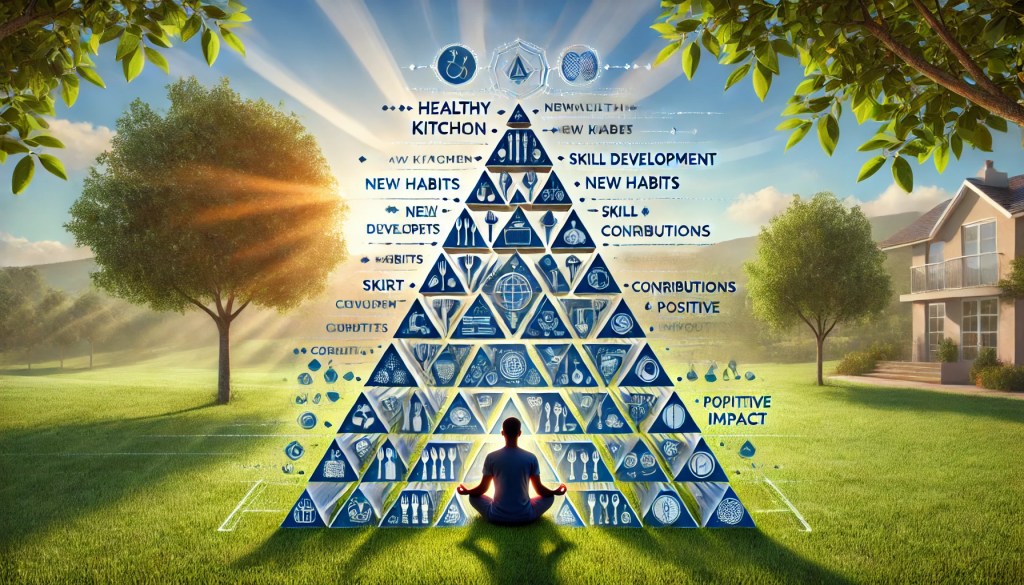
Meet the Dilts Pyramid. It consists of six levels: at the base is the environment, followed by behavior, capabilities, beliefs, identity, and at the very top—mission. This tool helps not only to understand your goal but also to check how truly important it is to you. Imagine that your goal has already been achieved and analyze it through the levels of the pyramid. How has your environment changed? What new habits have appeared? Does this align with your personality?
This analysis helps determine whether your goal is truly worth pursuing or if it needs adjustment. Let’s break down how to use this method in practice.
🏡 Step 1: Environment — How Has Your Surrounding Changed?
Imagine you have already achieved your goal. Look at your surroundings: where are you, who is around you, what resources do you have? For example, if your goal was to adopt a healthy lifestyle, has your environment changed? Perhaps your kitchen is now stocked with healthy food, your home has a dedicated space for exercise, and your social circle includes more health-conscious people.
If these environmental changes feel unnatural or inconvenient, it might be a sign that your goal is not entirely yours or needs adjustment.
💭 Think about this:
– Where am I after achieving my goal?
– Who is around me?
– What resources have I gained or lost?
🚶 Step 2: Behavior — How Have Your Habits and Actions Changed?

If you have reached your goal, your lifestyle has changed. What new habits have emerged? What do you now do daily? For example, if your goal was to wake up at 5 AM, how has your daily routine changed? Do you feel comfortable with these changes, or do they feel forced?
If your new habits don’t bring joy but rather stress you out, it may be worth reconsidering your goal or the way you pursue it.
🔎 Now ask yourself:
– How do I behave after achieving my goal?
– What new habits have I developed?
– Do I feel comfortable living this way?
🛠️ Step 3: Capabilities — What Skills Do You Now Possess?

Every goal requires certain knowledge and skills. Imagine you have already achieved your goal. What skills do you now have? For example, if you dreamed of becoming a blogger, you’ve likely learned to write engaging content, interact with your audience, and promote your work.
Do you feel comfortable with these skills? Or does it seem like you are spending too much energy on something that doesn’t bring joy?
🤔 Consider this:
– What skills have I gained?
– Which of them do I enjoy, and which feel difficult?
– Am I willing to continuously develop these abilities?
💡 Step 4: Beliefs and Values — Does Your Goal Support Your Principles?

Your beliefs and values determine how comfortable you will be living with your achieved goal. For example, if you aimed to work in a large corporation for a high salary but deeply value freedom and flexibility, could this create an internal conflict?
Imagine you have reached your goal. Do you feel inner harmony? If something raises doubts, it may be worth adjusting either the goal itself or the way you approach it.
🌱 Reflect on this:
– What beliefs have strengthened or changed?
– Does my goal align with my values?
– What does this goal give (or take away) from me on a deeper level?
🏆 Step 5: Identity — Who Have You Become?

Achieving a goal is one thing; understanding how it has changed your perception of yourself is another. For example, if your goal was to write a book, who do you feel like now? Do you see yourself as a writer?
If this new identity brings joy and a sense of belonging, then your goal was well chosen. However, if you don’t feel like the person you envisioned despite achieving success, it may be worth reconsidering either the journey or the end result.
🧐 Ask yourself honestly:
– How has my self-perception changed?
– Do I feel comfortable in this new role?
– Does this align with my inner self?
🌍 Step 6: Mission — How Has This Affected Others?

The highest level of the pyramid is your goal’s impact on the world around you. Imagine you have reached your goal. How has it influenced others? For example, if your goal was to become a mentor, are you helping people? Do you feel that your work is meaningful?
If your goal does not leave a positive impact on others or does not give you a sense of purpose, consider adjusting it so that it brings not only personal satisfaction but also value to the world.
💖 Think about the bigger picture:
– How has my goal affected other people?
– Do I feel like I am doing something meaningful?
– Would I like to continue developing in this direction?
🎯 Conclusion

Achieving a goal is not just about the final result but also about the changes it brings to all aspects of your life. By running your goal through the Dilts Pyramid, you can foresee whether it truly suits you and is worth pursuing.
If thinking about your achieved goal brings joy and harmony, then you are on the right path. If something feels off, consider adjusting your goal or choosing a different direction.
Use this method consciously, and your goals will truly become your own! 🚀
 Blogtent – Relevant, Useful, Tasty, Beautiful, and Interesting
Leave a comment